Those who can, teach.

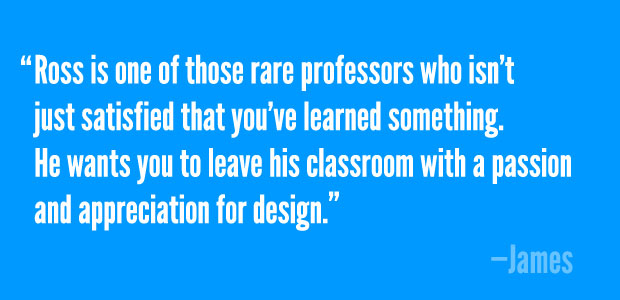
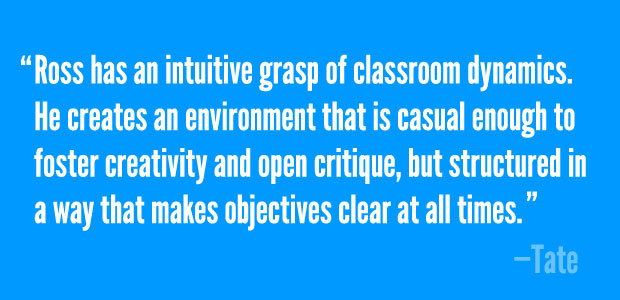

Starting in 2006, while working as a full-time graphic designer in Washington, D.C., I became an adjunct instructor at American University, my alma mater. In 2010, the opportunity arose to transition into a full-time role as an instructor at American University, teaching the very same classes that I attended as a student. The transition from "full-time designer" to "full-time educator" could be seen as a career change to some, but to me it seemed like using the same skills in a different way. I am still sharing my geeking-out love of design with others, and still working to create the best projects possible (albeit with a larger team). I try to look at it as a position that's part art director and part entertainer, attempting to light the fire for design in others that I have myself.
Welcome Back
Working within a program that I attended has been a rare opportunity to work alongside former instructors as peers to develop curricula that better prepare the students for the ever-changing graphic design industry. Many of my additions to the program revolve around a simple idea of creating classes and projects that address issues I experienced after graduating. Much of this has been an emphasis on real-world projects, making sure what is designed in interactive classes is not only laid out in Photoshop, but coded, browser-tested, and ultimately put online in order to take design ideas from the theoretical to the practical.
It's Never Finished
The philosophy of the AU graphic design program focuses on process and craft. Every project is approached at a basic level with research into methods, the existing market, and inspiration. From there we move onto sketches and wireframes, slowly honing the project at each stage of the process. We then work towards designs, finally implementing project as either a print or interactive piece. Along the way, we teach students that a project can and should always be made better. Every step matters from colors to typography, composition to content.
From Milton Glaser to LOLcats
Designers are visual and practical learners. That means showing examples of many different types of design, good and bad, for discussion and analysis. While I make sure to cover notable points in the history of design, I also make sure to cover what is currently happening due to the creativity incubator that is the internet. I share examples of work from practicing professionals, as well as student work found throughout the web.
I also believe that to understand how to create web sites, you have to have a better understanding of the web. That means being aware of trends, whether they are visual, technical, or cultural. Of all the projects I assign, the one that gets the most feedback from students is the "design presentation", an open-ended opportunity for students to present on any topic related to design, be it inspirational, cultural, or technical as long as they find a way to relate it to what we are studying in class.